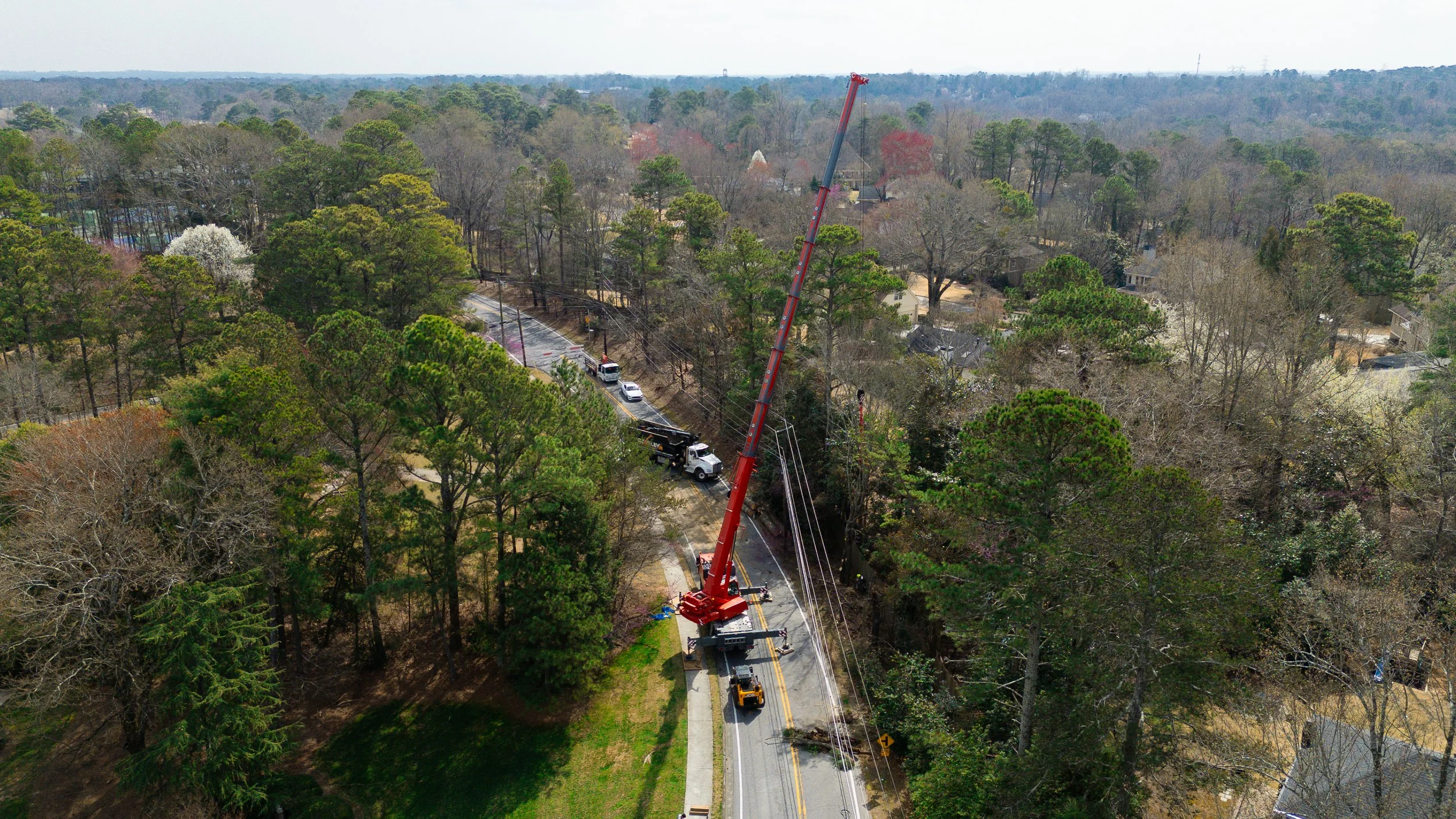
Right-of-Way Tree Removal — North Georgia & Metro Atlanta
Roads. Utilities. Infrastructure. Cleared Safely.
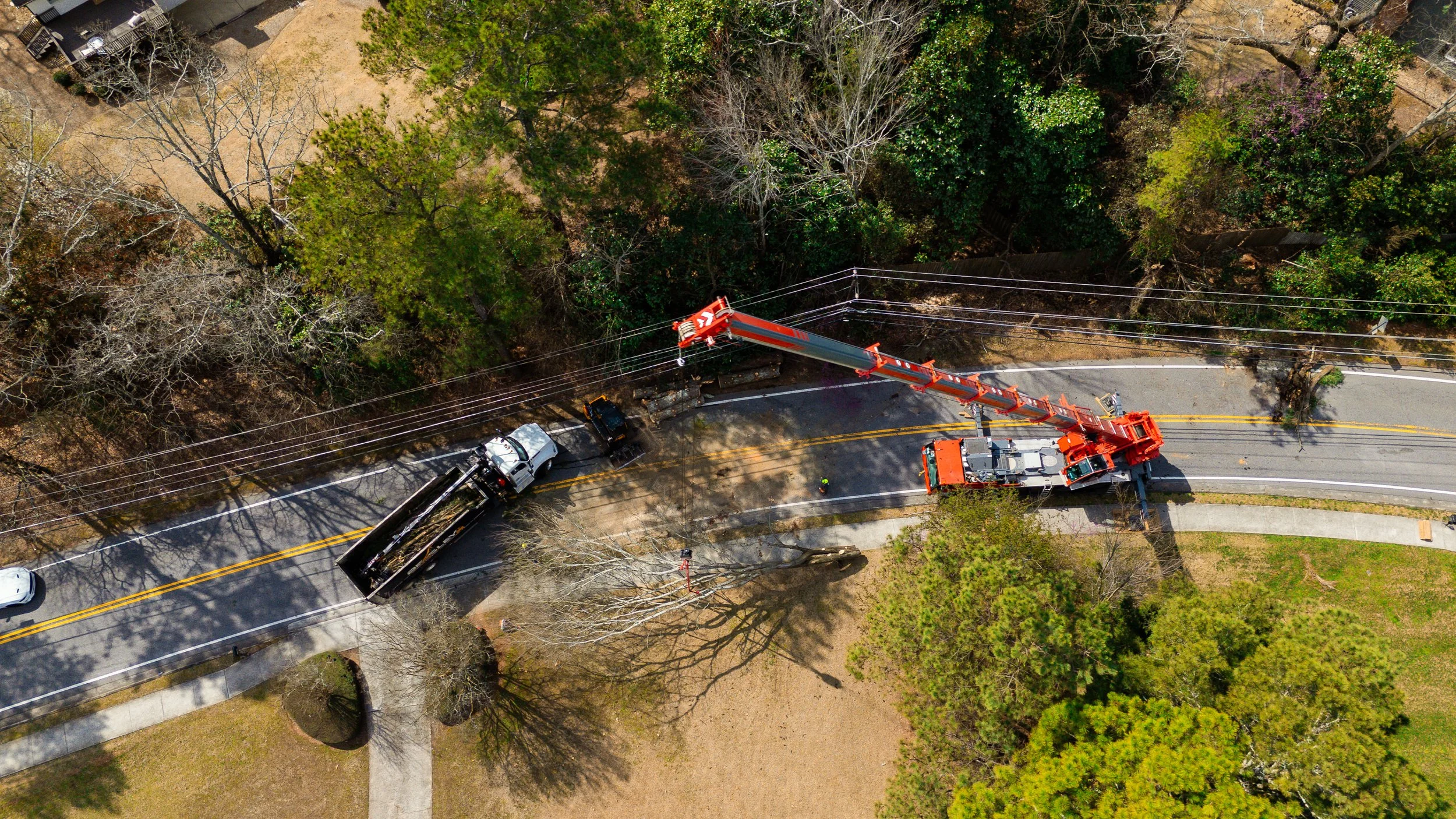
Right-of-way tree removal is one of the most technically demanding categories of tree work — carried out in active road corridors, alongside energized utility lines, and within tight public spaces where a fallen limb or an uncontrolled removal could endanger the public, block infrastructure, or cause a power outage. Beasley Tree Experts provides NCCCO certified, crane-assisted right-of-way tree removal for government agencies, utility companies, developers, and property owners across Cherokee County and Metro Atlanta. Our 110-ton Liebherr crane, ISA certified arborists, and 24/7 availability make us the contractor of choice for the ROW work others turn away.
What Is Right-of-Way Tree Removal?
A right-of-way (ROW) is the strip of land alongside or beneath roads, power lines, pipelines, railways, and other public infrastructure where the government or utility has the legal right to manage vegetation. Trees growing within a ROW that are dead, dying, hazardous, or interfering with infrastructure must be removed in a controlled, safe manner that protects the surrounding road users, infrastructure, and public. This is not the same as a standard backyard removal — ROW work requires traffic management, coordination with utility providers where lines are present, and the ability to remove large trees in tight corridors with no safe conventional fall path.
Types of Right-of-Way Tree Removal We Handle
- Road & Highway ROW — dead, dying, and hazardous trees alongside state highways, county roads, and city streets — including trees that have fallen or are leaning toward the road surface
- Utility Distribution ROW — trees growing within or adjacent to overhead electrical distribution corridors that pose a risk of contact with energized lines
- Transmission Line ROW — large mature trees beneath or adjacent to high-voltage transmission infrastructure
- Pipeline & Infrastructure ROW — vegetation management alongside water, gas, and other infrastructure easements
- Rail Corridor Clearance — tree removal alongside railway rights-of-way in coordination with rail operators
- Storm Emergency ROW Clearance — immediate 24/7 response for trees that have fallen across roads or power lines following storm events
Our Equipment for Right-of-Way Work
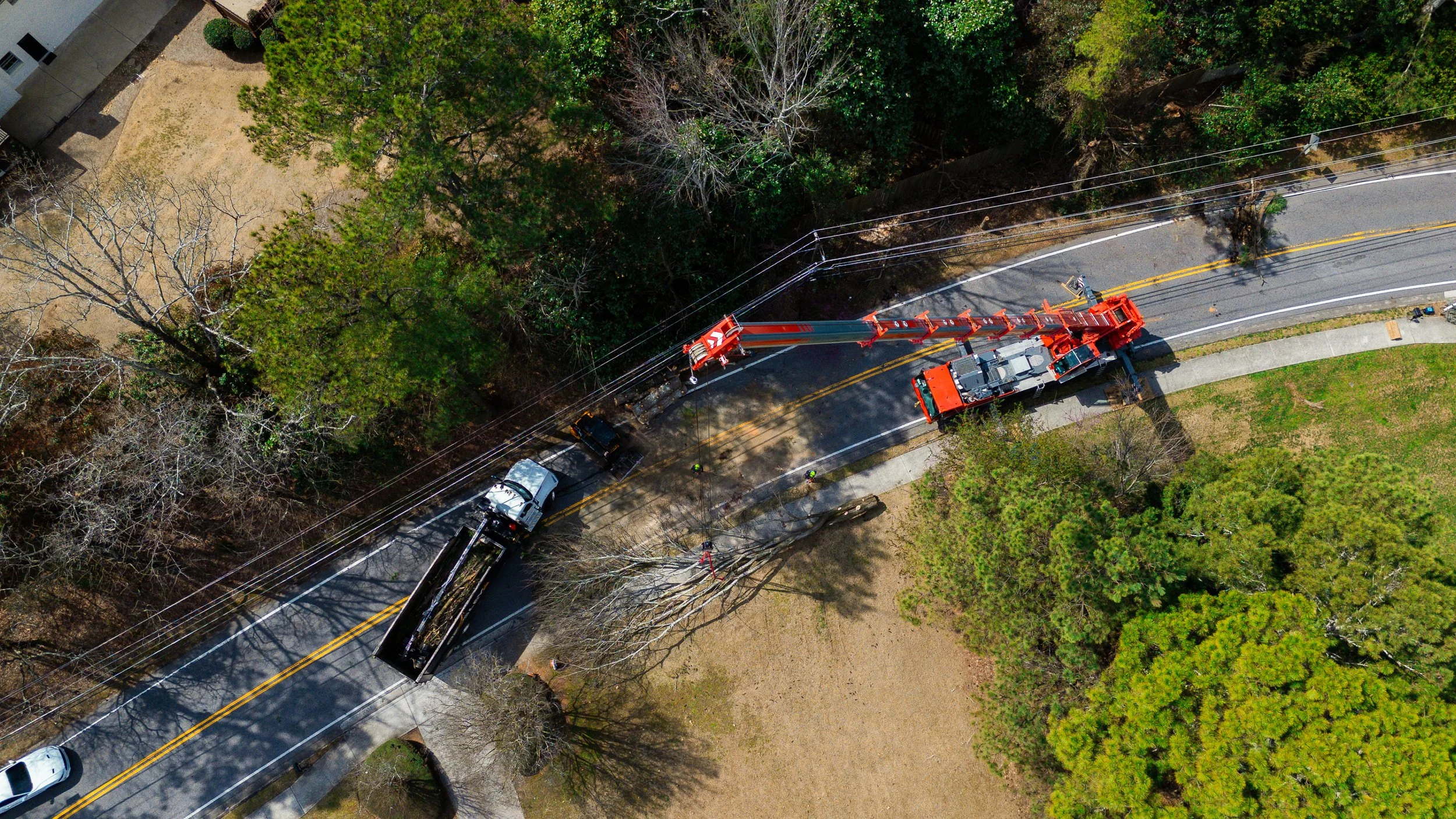
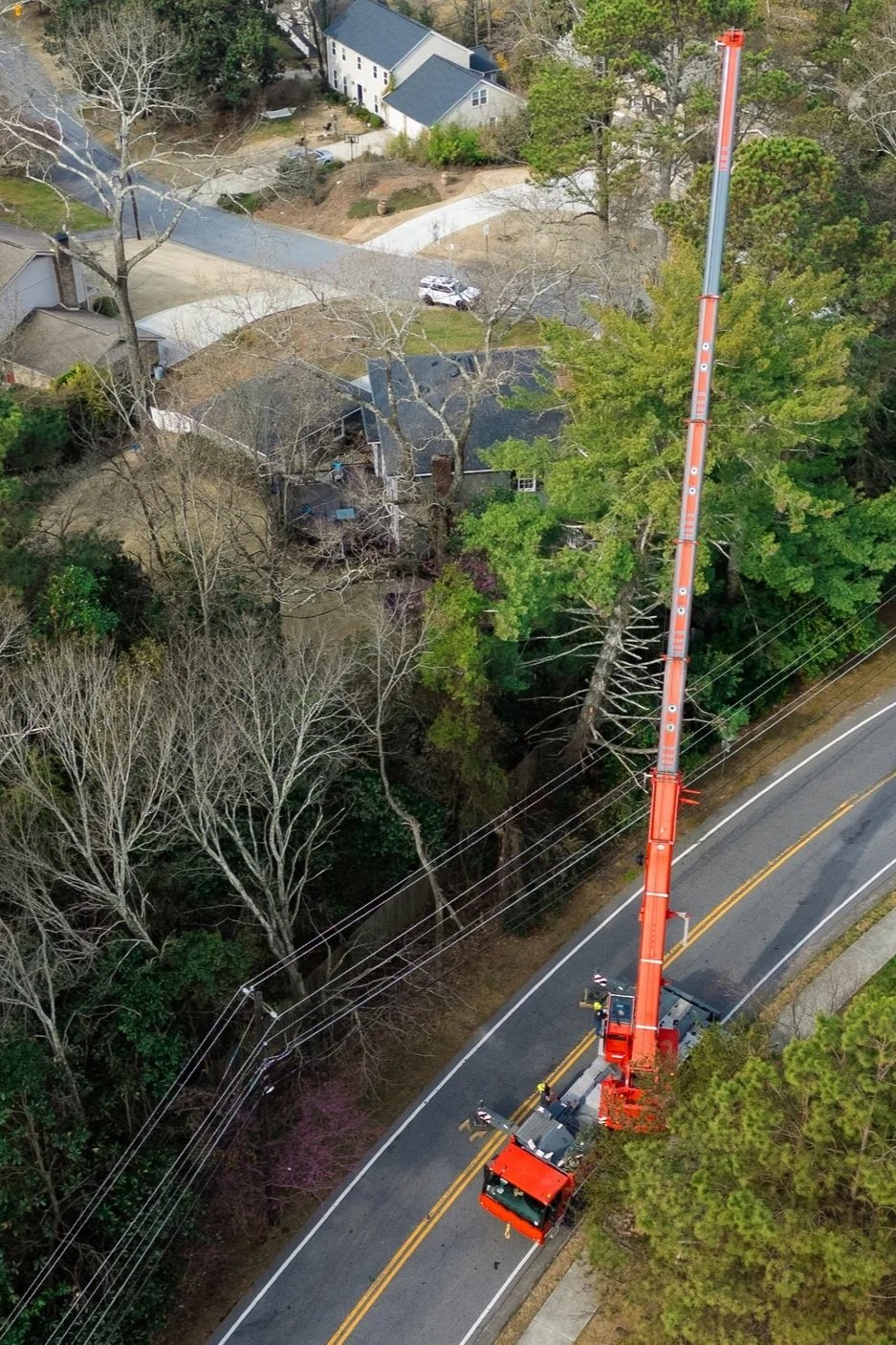
Right-of-way tree removal demands a different level of equipment than residential or commercial work. Our 110-ton Liebherr crane — one of the most powerful mobile cranes in North Georgia — allows us to lift and remove large tree sections vertically from the ROW corridor without any ground-level swing or fall risk. This is especially critical in narrow road corridors where there is no room for a tree to fall in any direction, and adjacent to utility lines where uncontrolled movement would cause a line contact incident.
- 110-Ton Liebherr Crane — precision vertical extraction from active road and utility corridors
- NCCCO Certified Crane Operators — trained to OSHA 29 CFR §1910.180 standards for crane work near energized infrastructure
- Grapple Truck — fast, self-loading debris removal that clears road surfaces and ROW corridors quickly
- Full climbing and rigging equipment — to ISA and ANSI Z133 standards for crew working in and around trees adjacent to infrastructure
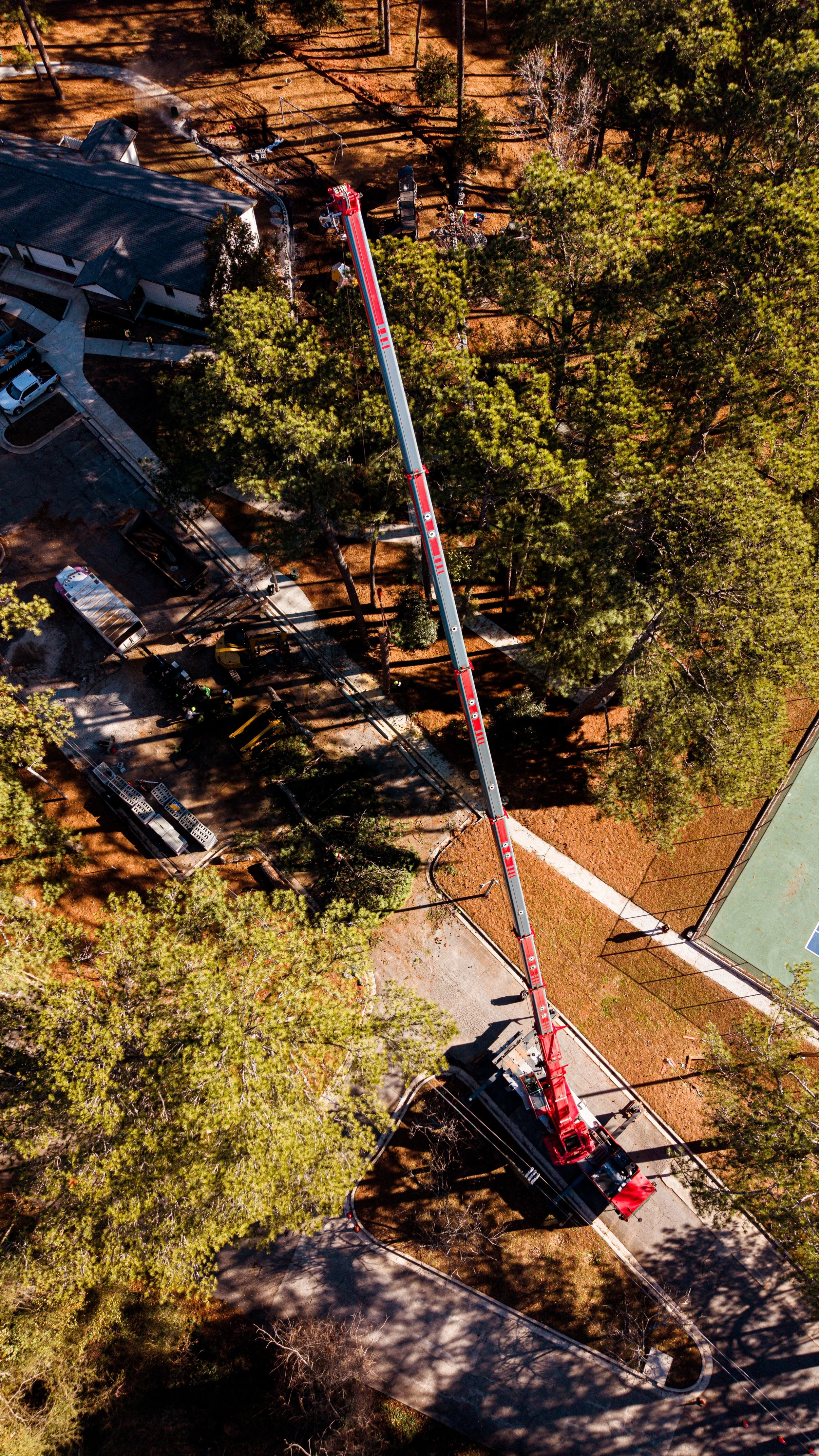
Municipal tree removal
We provide Right-of-Way services across Ball Ground, Canton, Woodstock, Waleska, Holly Springs, Cartersville, Emerson, Adairesville, Jasper, Ellijay, Acworth, Kennesaw, Powder Springs, Marietta, Smyrna, Mableton, Austell, Tucker, Dunwoody, Atlanta, and surrounding areas.
Municipal or Government Contractor Inquiry?
Why Right-of-Way Work Requires Specialist Contractors
Most general tree companies do not have the certification, the insurance, or the equipment to safely carry out ROW removals in these conditions. Beasley Tree Experts has all three. Our ISA certified arborist assesses every tree before work begins, our NCCCO certified crane operator plans every lift to OSHA standards, and our insurance meets the requirements of government and utility contracts.